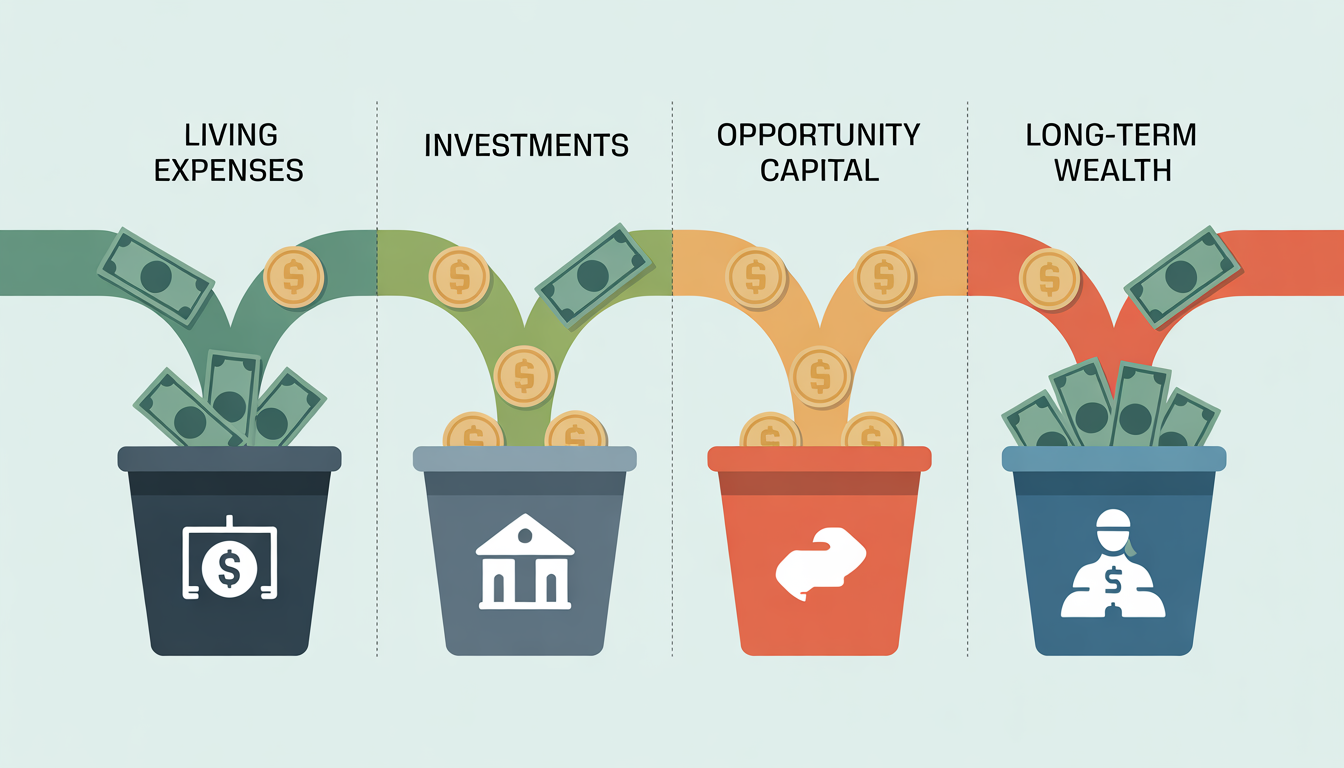
1. Living Expenses
This bucket covers your daily needs: rent or mortgage, groceries, bills, and lifestyle spending. The wealthy keep this bucket separate from other money, ensuring their lifestyle is sustainable without touching investments or long-term wealth funds. Managing this bucket wisely prevents lifestyle inflation from eating into your wealth-building capacity.
2. Investments
The investment bucket is where money works for you. Stocks, bonds, index funds, real estate, and other appreciating assets fall here. Wealthy individuals prioritize this bucket because it grows over time, generating passive income and compounding wealth. The key is to consistently fund this bucket and let it grow uninterrupted.
3. Opportunity Capital
Opportunities rarely wait. The wealthy maintain a reserve specifically for seizing opportunities: starting a new business, buying undervalued assets, or investing in emerging trends. This bucket allows them to act fast and take advantage of chances others might miss because they’re cash-strapped or fully invested elsewhere.
4. Long-Term Wealth
This bucket is about legacy. It includes retirement accounts, trusts, generational wealth funds, and other strategies designed to secure your financial future and protect your family. By separating this money, wealthy people ensure that even if other buckets fluctuate, long-term wealth continues to grow and remain intact.
Why This Framework Works
Dividing money into these four buckets provides clarity and control. It stops you from overspending, encourages disciplined investing, and prepares you to act on opportunities without risking your lifestyle or future. The wealthy don’t rely on luck—they rely on structure.